Blog
Merino wool vs cotton for baby clothes: what matters?
Start with the job you need the clothing to do. An everyday bodysuit, an outdoor mid layer and bedtime pyjamas are different purchases. The fibre label helps, but it cannot choose the whole outfit for you.
Cotton: a useful starting point for hot weather
The NHS recommends lightweight, breathable cotton for hot-weather daytime clothing. The word lightweight matters: a thick cotton sweatshirt is a different garment from a thin cotton bodysuit.
If cotton clothes already work for your baby's everyday routine, there is no need to replace the drawer because another fabric sounds more technical. Check the weight, fit and care label of the particular item.
Merino: understand the moisture claim
Woolmark describes wool fibres as able to absorb moisture vapour and release it as conditions change. That explains a fabric property; it does not prove that a baby will stay at the right temperature in any merino outfit.
Woolmark is a wool-industry organisation. We reference its explanation of the fibre, not as independent medical advice or evidence that merino is safer than cotton. Neither fabric removes the need to adjust clothing when conditions change.
The Woolmark Company · Wool is naturally breathable (industry source) ↗
Compare two garments, not two labels
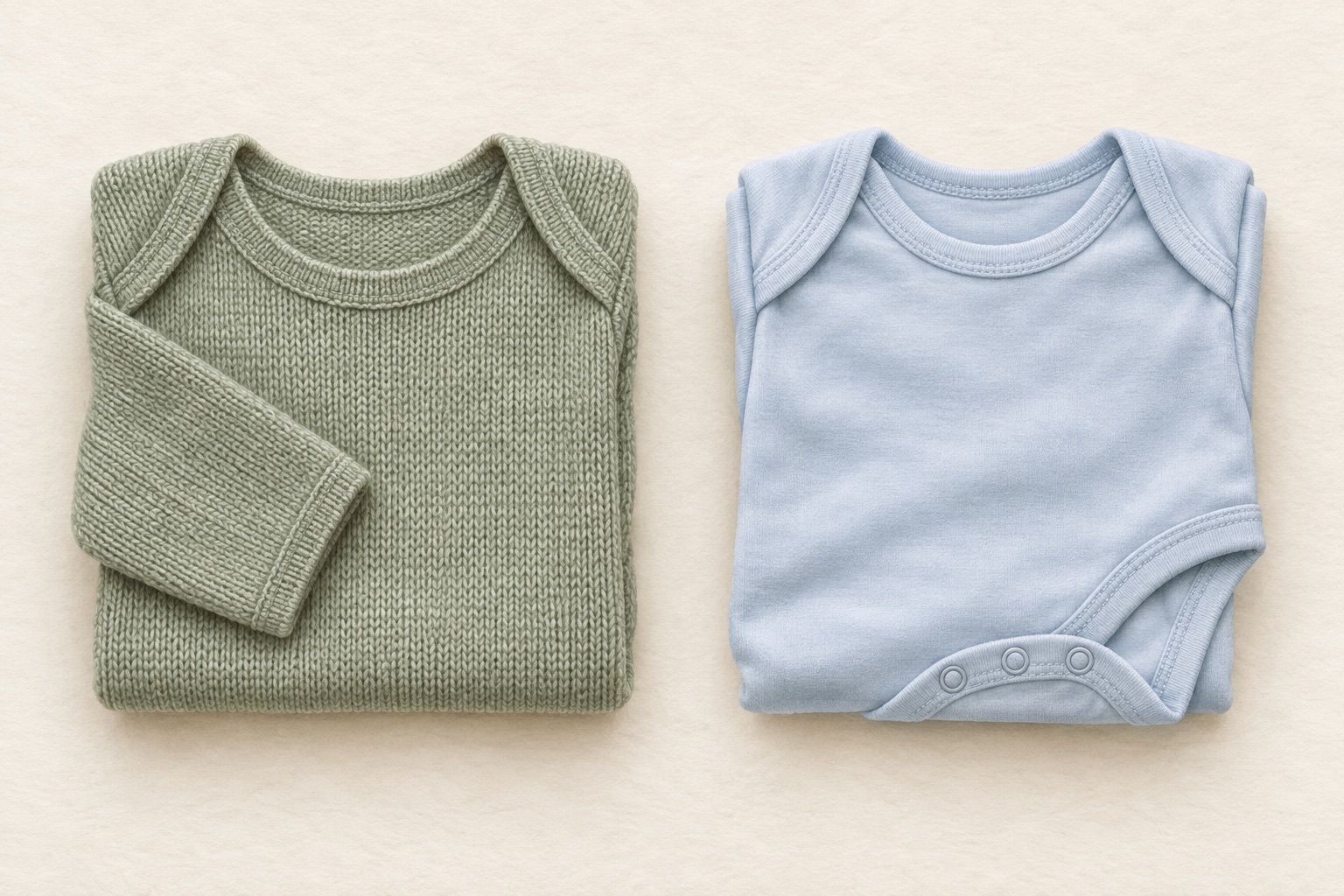
Read the fibre percentages: a merino blend is not necessarily the same fabric as a pure-wool item. Then compare thickness, sleeves, leg length and foot coverage. Changing the shape of the garment at the same time as the material makes it harder to judge which difference matters.
For a practical comparison, lay out two bodysuits of a similar size and shape. Check seams and fastenings, how each fits now, and whether it works with the other layers you use. Price alone will not answer those questions.
Include washing in the decision
Read washing and drying instructions before buying. Do not assume that every merino item needs hand-washing or every cotton item can go in the dryer. Think about how many clean changes you need between washes and whether the garment fits that routine.
A spare that is clean, dry and fits is more useful on an outing than a preferred fabric still waiting to be washed. Start with a small number of pieces before buying a whole set.
For sleep, follow the complete product guidance
The Lullaby Trust explains that different materials and combinations trap different amounts of heat. A fibre name alone cannot tell you the right bedtime combination. Use the sleeping bag's own instructions.
Snugometer lets you compare supported materials for the same clothing item. Its warmth scores are provisional planning assumptions, not laboratory measurements of the clothes in your drawer. Use the materials guide to explore the options, then check your own labels.
Sources & further reading
- NHS · How to dress a newborn ↗
- The Woolmark Company · Wool is naturally breathable (industry source) ↗
- The Lullaby Trust · Room temperature ↗
These organisations support the guidance linked above. They have not reviewed or endorsed Snugometer or its outfit examples.